Fresh details of the K638.2 billion 2013/14 national budget Finance Minister Dr Ken Lipenga presented in Parliament on Friday show, among other things, that the internal travel budget has doubled to nearly K33 billion.
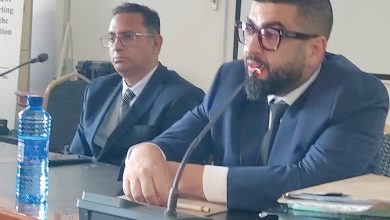
The jump in the internal travel budget by around 108 percent on Saturday irked the Malawi Economic Justice Network (Mejn) given the prevailing austerity mood and surprised the Catholic Commission for Justice and Peace (CCJP) who questioned the rationale for such a huge budget on local travel.
According to a summary of recurrent and capital estimates at item level contained in the draft 2013/14 financial statement, the proposed budget for internal travel has jumped from the approved K15 795 billion in the 2012/13 fiscal year to K32 894 billion.
In the ongoing financial year that ends on June 30, this budget line is projected to overspend by K2.4 billion—a 15 percent surge—when the approved K15 795 billion estimate is compared against the revised 2012/13 internal travel estimate of K18.2 billion.
The 15 percent increase in the outgoing budget makes the more than 100 percent rise in the incoming blueprint suspicious to CCJP.
“An increase of K17 billion, which is more than double the last approved estimates, tells us that the People’s Party administration will use taxpayers’ money for campaign in the 2014 tripartite elections unless the Minister of Finance can justify this expenditure line by line,” said CCJP national secretary Chris Chisoni in an interview on Saturday.
Lipenga could not be reached to specifically comment on CCJP’s campaign finance claims and justify the increase in the local travel budget.
In his budget statement, however, the minister said government is committed to spending restraint despite this being an election year budget.
Meanwhile, the external travel budget has increased by 36 percent from the approved K3.3 billion in 2012/13 to K4.5 billion in the new budget.
The doubling of internal travel comes amid concerns from various quarters that the Executive, especially President Joyce Banda’s numerous travels and those of officials in her administration, are draining public resources.
But the President—who has instituted spending control measures largely targeting civil servants such as limiting travel to a pre-determined number of days a month—has remained defiant about her own local travel and is currently on the road constantly.
She criss-crosses the length and breadth of the country distributing maize, cows, inspecting crops and attending to mundane functions critics say are fit for a district commissioner, principal secretary or Cabinet minister.
The travel budget is one of the major causes of government over-expenditure, according to Treasury.
Major expenditure items under the travel budget include allowances, fuel and vehicle maintenance costs.
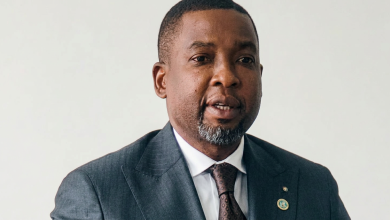
Mejn executive director Dalitso Kubalasa on Saturday described the sharp jump in the domestic travel budget as “worrisome” and “disappointing” given that government expects everyone to tighten belts.
He, however, said he could not offer a detailed response because his organisation is still analysing the budget.
In another development, government has elevated agriculture and food security to the ‘lion’s share’ status at the expense of education, which has traditionally claimed the largest chunk of the cake.
The budget has allocated K126.5 billion or 20 percent of the total 2013/14 estimates to agriculture. This year’s allocation is higher than the K87 billion allocation it got in 2012/13, which represented 18 percent of total expenditure.
At K99.19 billion—representing just over 16 percent of the national budget, the education sector has the second biggest allocation and boasts a nominal improvement on the K80 billion 2012/13 revised allocation.
But executive director of Civil Society Education Coalition Benedicto Kondowe, while praising government for the increase on Saturday, pointed out that as a ratio of total expenditure, the figure has dropped from 19 percent in 2012/13 to around 16 percent.
Even when the allocation to the education sector is analysed as a percentage of total recurrent expenditure, the figure has fallen from 23 percent in 2012/13 to 20 percent in 2013/14, according to Kondowe.
“As a sector, we are worried that the budget statement was blank on issues to do with Malawi University of Science and Technology, just as the President’s State of the Nation Address was quiet about it,” he said.
The budget has set aside K18.3 billion for the Malawi Electoral Commission for the management of the May 2014 tripartite elections.
Of this, the budget shows that donors will provide K7.2 billion or around 40 percent of the polls’ costs.
This means the Malawi Government may shoulder 60 percent of the election cost or K11.1 billion.
Commenting on the elections budget, Chisoni said he was happy that government has taken greater responsibility than donors in funding elections.
He said this shows commitment to democracy and pushed government to own the electoral process instead of donors.